
Ayurvedic Pharmacy Stock Management for Clinics
17 November 2026 · AyurHealthPlus
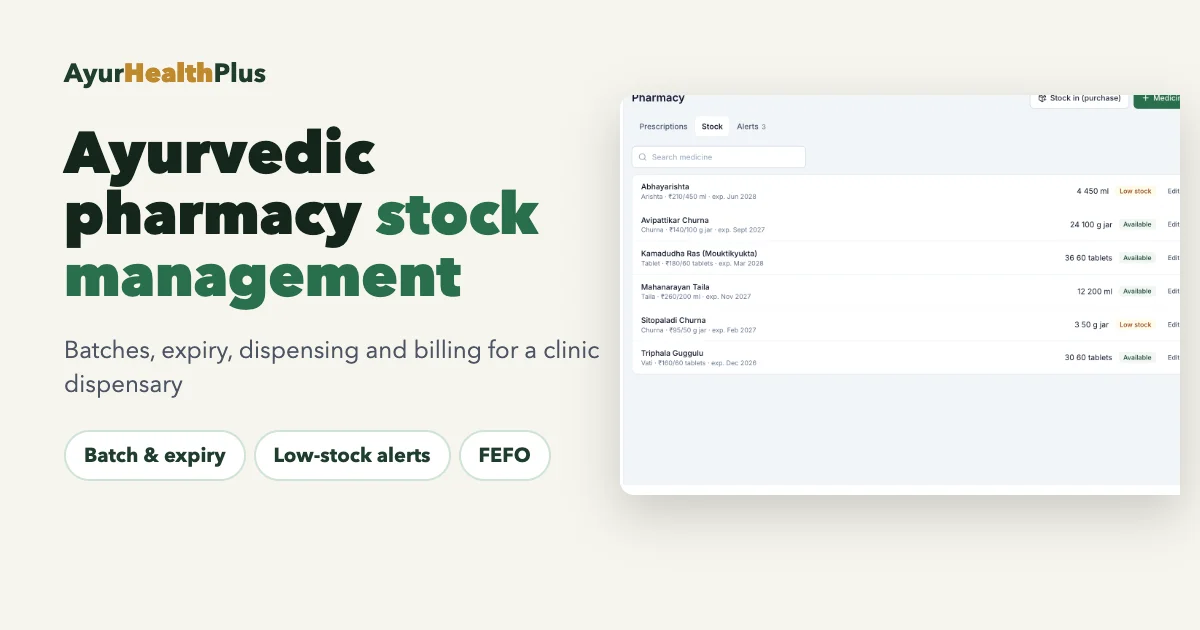
How to manage medicine stock in an Ayurvedic clinic pharmacy: batches, expiry, minimum stock, FEFO dispensing from prescriptions, billing and monthly checks.
Short answer: To manage an Ayurvedic clinic pharmacy, record every medicine you keep with a minimum stock level, and enter every purchase with its batch number and expiry date. Dispense against the doctor's prescription, using the batch that expires first. Put dispensed medicines on the patient's bill, and check low-stock and near-expiry alerts every week. Done this way, stock in the register matches stock on the shelf, and medicines rarely expire unsold.
This guide is for BAMS doctors and clinic staff who give medicines from their own dispensary. It covers what to record, how to dispense and bill, how to avoid expiry losses, and what to look for in pharmacy software.
Key points
- Track stock by batch and expiry date, not just by medicine name.
- Dispense first expiry, first out (FEFO): the batch that expires first goes out first.
- Set a minimum stock for every medicine, so you reorder before you run out.
- Dispense from the prescription, and put the medicines on the same bill as the consultation.
- Check near-expiry stock monthly, while there is still time to use it.
What should an Ayurvedic clinic record for each medicine?
Record each medicine once, as you would see it on the shelf:
- Name and form: for example "Avipattikar Churna", Churna; "Kamadudha Ras (Mouktikyukta)", tablet; "Abhayarishta", Arishta; "Mahanarayan Taila", Taila
- Pack or unit: 100 g jar, 60 tablets, 450 ml bottle
- Selling price per pack
- Minimum stock: the level at which you reorder
- GST rate and HSN code, if your clinic is GST-registered
Write the variant in the name when there is more than one, such as Kamadudha Ras plain or Mouktikyukta, or Triphala Churna and Triphala Guggulu. The person dispensing must never have to guess.
How should purchases be entered?
Enter every purchase from the supplier's invoice, line by line:
- Supplier name and invoice number
- Medicine, quantity and batch number
- Expiry date (the batch is refused if it has already expired)
- Purchase price, and the selling price if it differs
- Shelf or rack, if you have more than one store
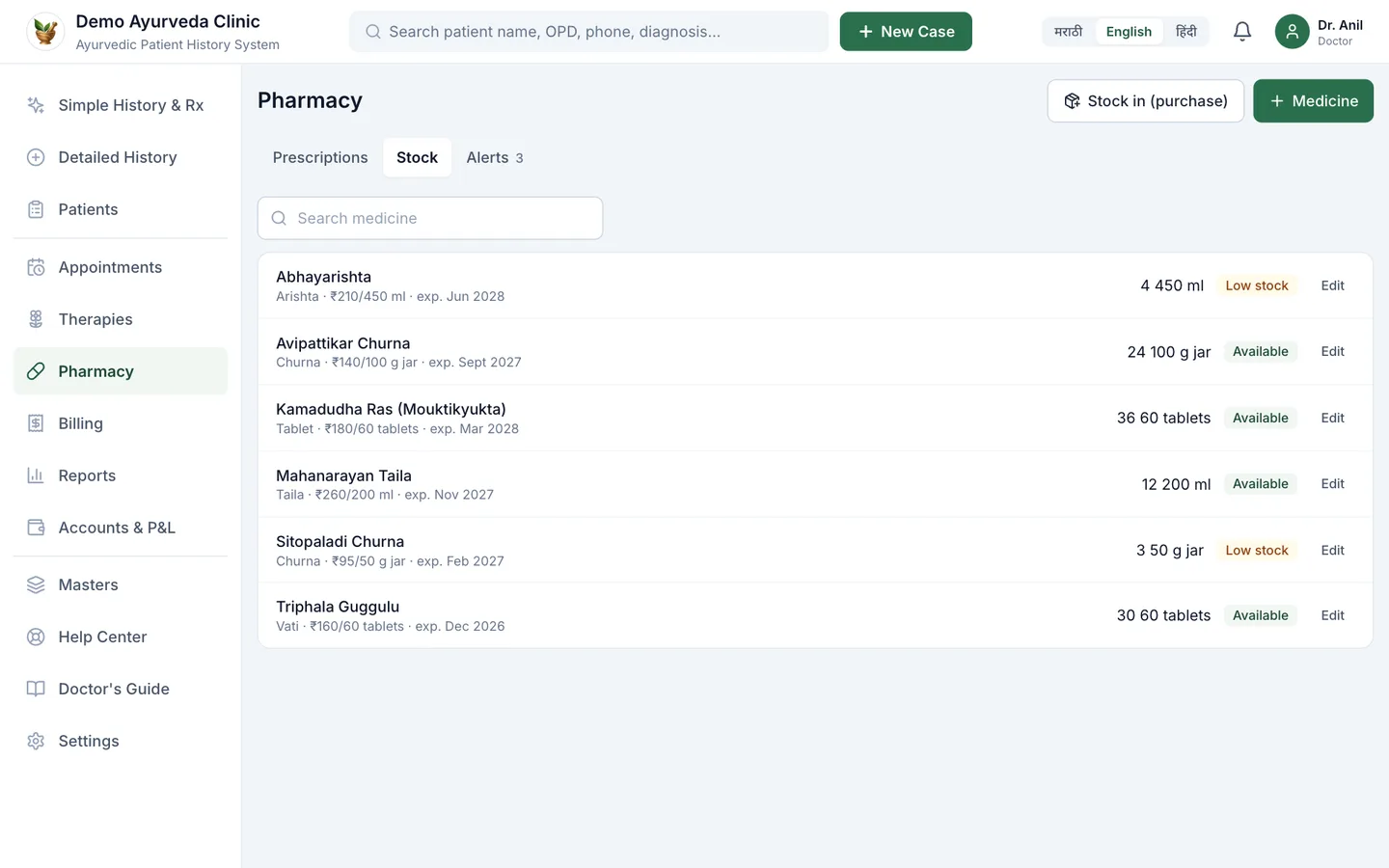
The same medicine bought twice has two batches with two expiry dates. That is why stock has to be tracked by batch: the total quantity alone can't tell you which bottles will expire next month.
What is FEFO, and why does it matter for Ayurvedic medicines?
FEFO means first expiry, first out: when you dispense, take the batch that expires first, even if a newer batch arrived earlier. Ayurvedic medicines have very different shelf lives. Churnas and Arishtas from different batches can expire months apart, and FEFO is the simplest way to stop old stock expiring at the back of the shelf.
Good pharmacy software applies FEFO for you. In AyurHealthPlus, when you choose a medicine to dispense, the earliest-expiring batch is used first and the screen shows its expiry date.
How should medicines be dispensed from a prescription?
Dispense against the doctor's saved prescription, not from a paper slip:
- Open the patient's prescription in the pharmacy.
- For each medicine, choose the matching item from stock and enter the quantity.
- If a medicine isn't in stock, mark it Not available, so the patient and doctor know to buy it elsewhere or change it.
- Keep Add to bill ticked, so the dispensed medicines go on the patient's bill automatically.
- Tap Dispense. Stock goes down at the same moment.
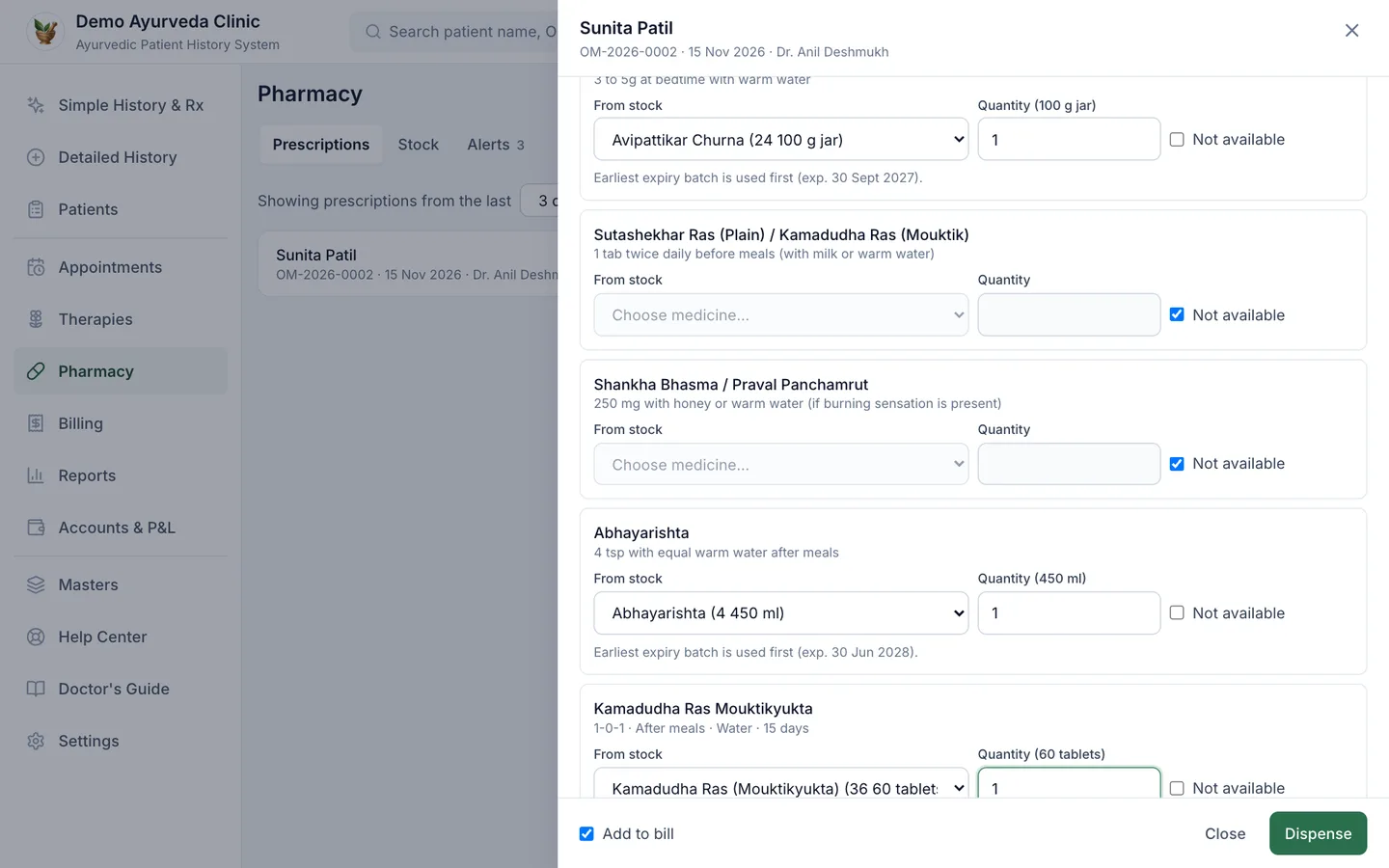
Dispensing this way closes the most common leak in clinic pharmacies: medicines handed over but never billed. See the Ayurvedic clinic billing guide for how the bill comes together.
How do you avoid running out of stock, and losing medicines to expiry?
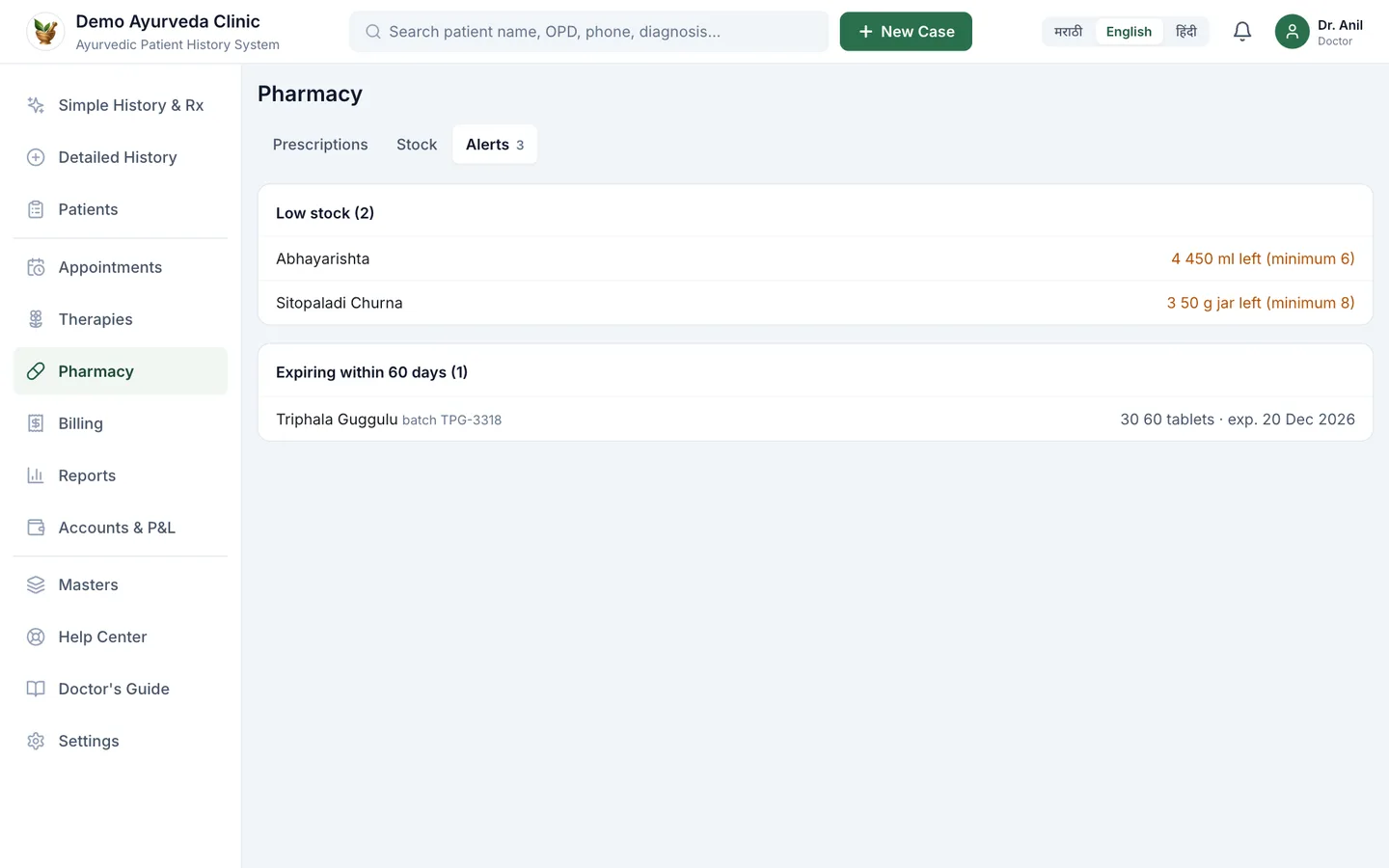
Use two alerts and look at them every week:
- Low stock: every medicine at or below its minimum level, so you can reorder before the shelf is empty
- Expiring soon: every batch expiring within the next 60 days, so you can use it first, return it to the supplier, or stop ordering more
When stock is broken, spilled or found short, record it as an adjustment with a reason, rather than quietly correcting the number. Then the stock register always explains itself.
What should you check every month?
- Medicines that expired this month, and their value. The goal is close to zero.
- Stock value at cost: how much money is sitting on your shelves
- Medicines that haven't moved in three months: stop reordering them
- Purchases this month compared with medicine sales on bills
These four numbers tell you whether the pharmacy makes money or quietly loses it.
What to look for in Ayurvedic pharmacy software
- Stock by batch and expiry, with FEFO dispensing
- Minimum stock levels, with low-stock and near-expiry alerts
- Dispensing straight from the doctor's prescription
- Dispensed medicines added to the patient's bill automatically
- Purchases with supplier, invoice, purchase price and selling price
- Stock adjustments with reasons
- GST rate and HSN code per medicine, and a separate GSTIN for the pharmacy if it is run as a separate business
- Reports on stock value, low stock and expiry
AyurHealthPlus includes all of these in the same system as the case paper, prescription and bill. Medicines prescribed in the OPD appear in the pharmacy to dispense, and dispensed medicines go on the patient's bill. See Ayurvedic clinic management software, or how the pharmacy works in an Ayurveda hospital.
Frequently asked questions
How do I manage medicine stock in an Ayurvedic clinic?
Record each medicine with a minimum stock level. Enter purchases with batch numbers and expiry dates, and dispense against prescriptions using the earliest-expiring batch first. Check low-stock and near-expiry alerts every week.
What is FEFO in a pharmacy?
FEFO means first expiry, first out. The batch that expires first is dispensed first, which keeps medicines from expiring on the shelf.
Should dispensed medicines be on the same bill as the consultation?
Yes. One bill per visit, with consultation, medicines and therapy together, makes sure nothing dispensed goes unbilled.
How early should I act on expiring Ayurvedic medicines?
Check batches expiring within the next 60 days. That leaves time to use them first, return them to the supplier, or stop reordering.
Can Ayurvedic pharmacy software handle GST?
Yes. In AyurHealthPlus each medicine can carry its GST rate and HSN code. A pharmacy run as a separate business with its own GSTIN can keep its bills separate, with their own numbers.