
Clinic MIS Report: What an Ayurvedic Clinic Should Track
25 November 2026 · AyurHealthPlus
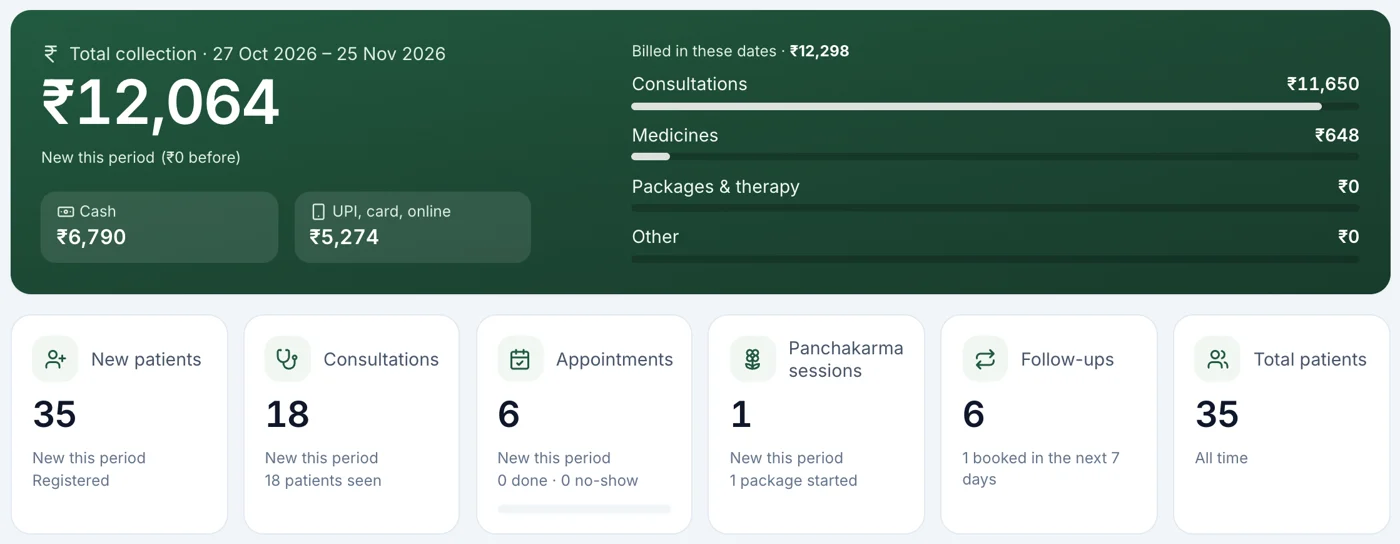
The numbers a clinic owner should see every day: collection, cash in hand, patients, Panchakarma, pharmacy and dues, compared with the period before.
Short answer: A clinic MIS report is one page with the numbers that tell the owner how the clinic is doing. For an Ayurvedic clinic that means total collection (split into cash and UPI or card), what was billed for consultations, medicines and Panchakarma, new and returning patients, appointments and no-shows, therapy sessions done, cash in hand after expenses and bank deposits, unpaid bills, and pharmacy stock alerts. Look at it daily, and compare each number with the same number of days before.
This guide explains what a clinic MIS report should contain, for owners and doctors who run their own OPD, Panchakarma centre or small Ayurvedic hospital.
Key points
- Keep the MIS to one page. If it needs scrolling through ten screens, nobody reads it.
- Split collection into cash and bank. They are checked in different places.
- Track the cash actually left, not only collection: cash received minus cash spent minus cash deposited.
- Always compare with the previous period, otherwise a number on its own means very little.
- Count Panchakarma sessions done, not only packages sold.
What is a clinic MIS report?
MIS stands for management information system. In a clinic, the MIS report is the owner's summary: money in, money out, patients and work done, for the dates you choose. It is different from the day book or a GST report, which an accountant uses. The MIS is for deciding things: whether to add a therapist, why collection dropped this week, or which medicine to reorder.
The numbers to track
Money
- Total collection: what was received, less refunds
- Cash vs UPI, card and online: cash has to be counted in the drawer, UPI shows in the bank
- Billed by type: consultations, medicines, Panchakarma packages and therapy
- Unpaid bills: from these dates and in total
- Expenses, and collection less expenses
Patients and work
- New patients registered
- Consultations and patients seen
- Appointments, completed visits and no-shows
- Panchakarma sessions completed and packages started
- Follow-ups booked in the coming week
Cash and stock
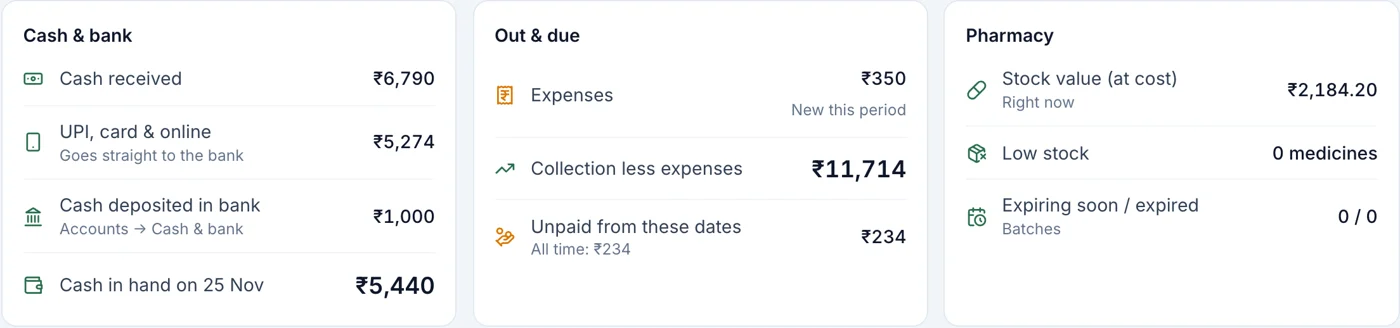
- Cash deposited in the bank, and the cash left in the clinic
- Pharmacy: stock value, low-stock medicines, batches expiring soon
Why compare with the previous period?
A collection of ₹12,000 this week is good or bad only against last week. Comparing each number with the same number of days just before shows the direction: more new patients, fewer no-shows, expenses going up. Seasonal changes are normal in an Ayurvedic practice (more Panchakarma in some months, more acidity and skin cases in summer), so also look at the same month last year once you have the data.
Cash in hand and bank deposits
Many clinics take most payments in cash. If cash is taken to the bank and not written down, the cash balance looks wrong at the end of the month. Record every deposit as a seperate entry: it moves money from cash to bank and is not income or an expense, so profit does not change.
Cash in hand = cash received − expenses paid in cash − cash deposited in bank.
See our guide to Ayurvedic clinic billing for bills, receipts and refunds.
Daily, weekly and monthly
- Daily (2 minutes): today's collection, cash balance, appointments and no-shows, unpaid bills
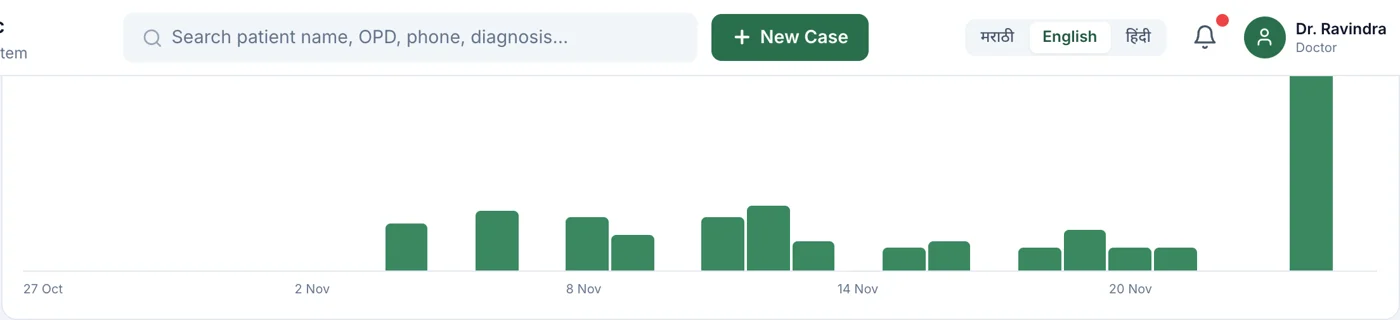
- Weekly: collection by day, which days and hours are busiest, Panchakarma sessions done
- Monthly: compare with last month, expenses, collection less expenses, stock to reorder
Common mistakes
- Counting packages sold as work done. A 14-day package sold today is not 14 sessions done.
- Mixing cash and UPI in one number, then not being able to match the drawer.
- Not recording bank deposits, so the cash never matches.
- Too many reports. If the important numbers are spread over many screens, they get ignored.
- Looking only at collection. Unpaid bills and no-shows show problems earlier then collection does.
The MIS dashboard in AyurHealthPlus
In AyurHealthPlus the Dashboard opens on the clinic MIS report. Choose today, 7 days, this month, 30 days or any dates, and every number is shown with the change from the period before:
- Total collection with cash and UPI, card and online, and what was billed by type
- New patients, consultations, appointments with no-shows, Panchakarma sessions and follow-ups
- Collection by day, payment modes, and billing by doctor
- Top medicines given and top therapies done
- Cash and bank: cash received, cash deposited in bank, cash in hand
- Expenses, unpaid bills, and pharmacy stock alerts
- Export to a spreadsheet, or print the MIS report on your letterhead
Money is shown only to staff who handle billing, and expenses and cash in hand only to the owner. The same Dashboard has a Clinic operations tab (waiting time, busiest hours, each doctor's queue) and a Clinical analytics tab (top diagnoses, Dosha, age and gender).
See Ayurvedic clinic management software for the full system, or Ayurvedic hospital management software if you also admit patients.
Frequently asked questions
What is an MIS report in a clinic?
It is a one-page summary for the owner: collection, expenses, patients, appointments, therapy sessions, cash in hand and unpaid bills for the chosen dates, usually compared with the previous period.
What should a daily clinic report include?
Today's collection split into cash and UPI or card, new patients, appointments and no-shows, Panchakarma sessions done, cash in hand and unpaid bills.
How is cash in hand calculated?
Cash received minus expenses paid in cash minus cash deposited in the bank, from the date the clinic started recording.
Is a bank deposit an expense?
No. Depositing cash moves money from cash to the bank. It is not income or an expense, so profit does not change.
Can clinic software make the MIS report automatically?
Yes. AyurHealthPlus builds the MIS from bills, appointments, therapy sessions, expenses and stock as they are entered, and it can be exported or printed.