Why Ayurvedic Clinics Are Moving to Digital Practice Management
2 October 2026 · AyurHealthPlus
Running an Ayurvedic clinic involves much more than patient consultations.
Doctors and clinic teams have to manage patient records, appointments, prescriptions, follow-ups, billing, medicines, therapy schedules and day-to-day administration. When these activities are managed through paper records, notebooks and multiple disconnected tools, it can become difficult to keep everything organized as the practice grows.
This is where digital practice management software for Ayurvedic healthcare can help.
What Is Ayurvedic Practice Management Software?
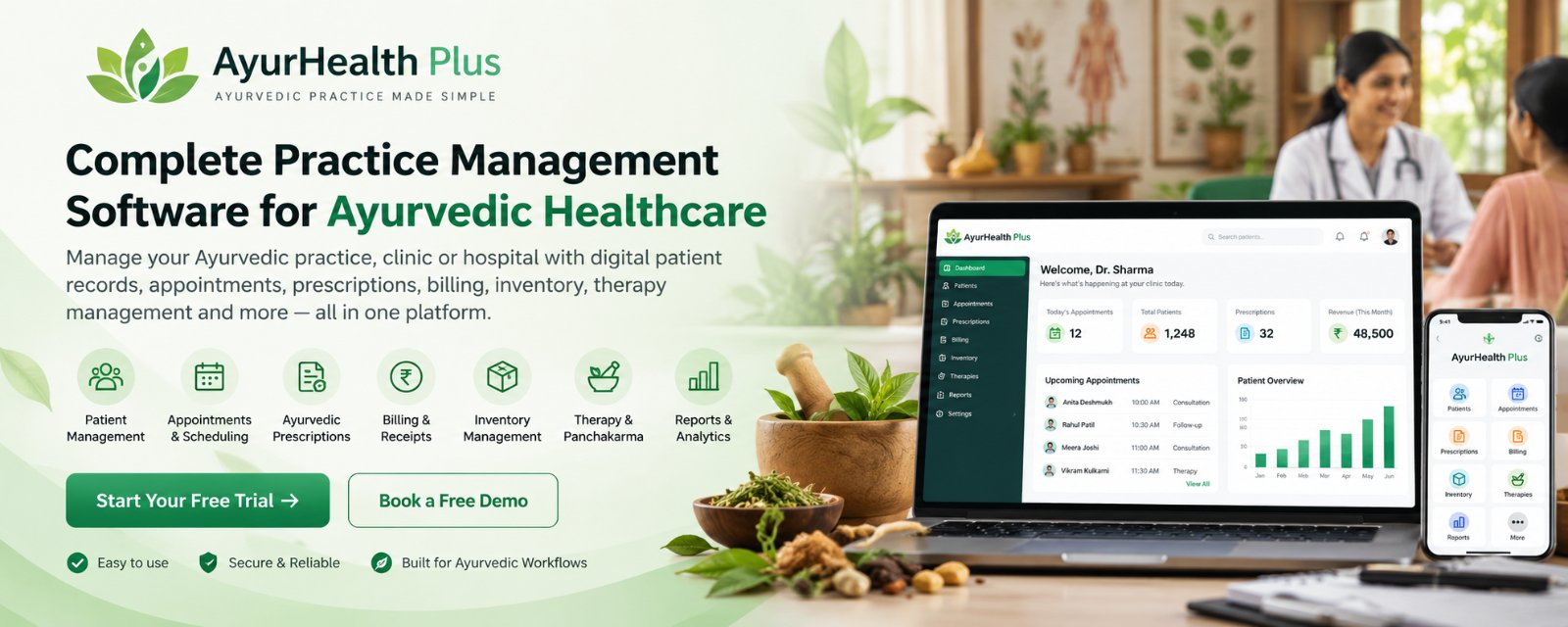
Ayurvedic practice management software is a digital platform that helps doctors, clinics and Ayurvedic healthcare organizations manage their daily clinical and administrative activities from one place.
Depending on the platform, this can include:
- Digital patient records
- Appointment scheduling
- Patient history and clinical notes
- Ayurvedic prescriptions
- Billing and receipts
- Medicine and inventory management
- Therapy and Panchakarma tracking
- Follow-up management
- Reports and practice analytics
- Multi-doctor and staff management
Instead of maintaining information across paper files, spreadsheets and separate applications, a clinic can bring important workflows together in a single system.
Why Is Digital Management Useful for Ayurvedic Clinics?
- Easier Patient Record Management
Paper files can become difficult to organize when a clinic has hundreds or thousands of patients.
A digital system can help organize patient information so doctors and authorized staff can access the relevant records when needed.
This can make it easier to review previous consultations, prescriptions, treatment history and follow-ups.
- More Organized Appointments
Managing appointments through phone calls, notebooks or messaging applications can become complicated as patient volume increases.
Digital appointment management can provide a centralized view of schedules and help clinics organize appointments more efficiently.
For multi-doctor clinics, it can also help coordinate schedules across different practitioners.
- Digital Ayurvedic Prescriptions
A specialized Ayurvedic healthcare platform can make prescription workflows more structured.
Doctors can create digital prescriptions while maintaining relevant patient and consultation information in the same system.
This can also make it easier for patients and clinic staff to refer back to previous prescriptions when appropriate.
- Better Follow-Up Management
Ayurvedic care may involve multiple consultations and ongoing treatment plans.
Digital records can help doctors and clinics maintain continuity by keeping previous consultation information and follow-up details organized.
This becomes particularly useful for practices handling a large number of returning patients.
- Simplified Billing and Receipts
Clinic administration often includes consultation charges, therapy charges, medicine sales and other payments.
A digital billing system can help maintain invoices, receipts and payment records in a structured manner.
This reduces the need to maintain separate manual records for every transaction.
- Managing Medicines and Inventory
Clinics that dispense or sell Ayurvedic medicines may also need to track their inventory.
Digital inventory management can help monitor medicines, stock levels and transactions, depending on the features available in the software.
This can be particularly useful for clinics that are growing and handling a larger range of products.
What About Ayurvedic Hospitals?
Digital practice management isn’t limited to individual doctors.
Ayurvedic hospitals and larger healthcare centers may have multiple doctors, departments, therapies, staff members and administrative processes.
A centralized system can help bring different workflows together while allowing organizations to manage users and access according to their operational requirements.
The exact requirements will vary between a solo practice, clinic and hospital, so organizations should evaluate software based on their actual workflows.
What Should You Look for in Ayurvedic Healthcare Software?
Before choosing a platform, consider whether it supports the workflows your organization actually uses.
Important areas to evaluate include:
Clinical records: Can you maintain complete digital patient histories?
Appointments: Can doctors and staff manage schedules easily?
Prescriptions: Does the prescription workflow support your Ayurvedic practice?
Billing: Can you manage invoices, receipts and payments?
Inventory: Can you track medicines and other clinic stock?
Therapy management: Does it support your therapy or Panchakarma workflows if required?
Multiple users: Can multiple doctors and staff members work within the system?
Security: How are patient records protected and who can access them?
Ease of use: Can doctors and staff learn the system without unnecessary complexity?
Digital Transformation Doesn’t Mean Changing the Way You Practice Ayurveda
Technology should support the clinical workflow rather than replace the doctor’s role.
The objective of digital practice management is to reduce administrative friction, organize information and make everyday clinic operations easier to manage.
Doctors can continue following their preferred clinical approach while using digital tools for documentation, scheduling, prescriptions, billing and other administrative workflows.
The Future of Ayurvedic Healthcare Is Becoming More Digital
As Ayurvedic practices grow, organized digital systems can become increasingly useful for managing the complexity of modern healthcare operations.
Whether you are an individual Ayurvedic doctor, a growing clinic, a multi-doctor practice or an Ayurvedic hospital, the right software can help bring your clinical and administrative workflows into one organized environment.
AyurHealth Plus is built with this goal in mind — providing digital tools for Ayurvedic doctors, clinics and healthcare organizations to manage their practice from one platform.
If you’re considering moving your Ayurvedic practice from paper-based workflows to a digital system, start by identifying the processes that consume the most time today and evaluate software based on how well it solves those specific problems.