
OPD Services in an Ayurveda Hospital: Departments and the Daily OPD Flow
17 November 2026 · AyurHealthPlus
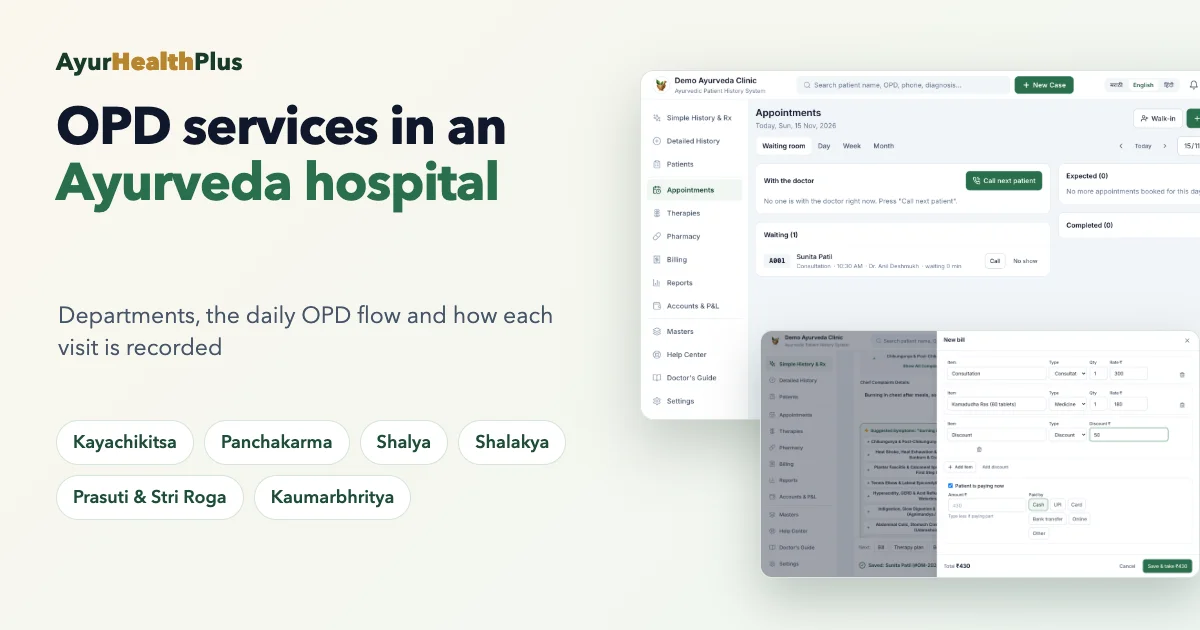
The OPD services an Ayurveda hospital offers by department, how a daily Ayurvedic OPD runs from registration to bill, and how to keep OPD records.
The OPD (out-patient department) is the front door of every Ayurveda hospital. Most patients never need admission: they are examined, given medicines and diet advice, sometimes started on a Panchakarma course, and asked to come back for follow-up. A well-run Ayurvedic OPD decides how patients feel about the whole hospital.
This guide explains what OPD services an Ayurveda hospital usually offers, how a daily OPD runs from registration to bill, and how hospitals and clinics keep OPD records. It is written for BAMS and MD (Ayurveda) doctors and for hospital administrators, and is useful for patients who want to know what to expect.
OPD services in an Ayurveda hospital, by department
Larger Ayurveda hospitals, especially Ayurveda college hospitals, run separate OPDs for each clinical speciality. Smaller hospitals and clinics combine them in a general Ayurveda OPD. The common departments are:
- Kayachikitsa (General medicine). Digestive complaints like Amlapitta, joint and muscle pain, diabetes (Prameha), skin diseases, respiratory complaints, lifestyle disorders and chronic illnesses. Usually the busiest OPD.
- Panchakarma. Assessment for Shodhana and other procedures, planning of Snehana, Swedana, Vamana, Virechana, Basti and Nasya, and local therapies such as Janu Basti, Kati Basti and Shirodhara.
- Shalya Tantra (Surgery). Ano-rectal conditions such as Arsha (piles), Bhagandara (fistula) and fissure, Kshara Sutra and Kshara Karma, wounds and minor procedures.
- Shalakya Tantra (ENT and eye). Eye, ear, nose, throat, head and dental complaints, with Kriyakalpa procedures such as Netra Tarpana.
- Prasuti Tantra and Stri Roga. Menstrual disorders, infertility support, antenatal care (Garbhini Paricharya) and postnatal care.
- Kaumarbhritya (Paediatrics). Children's illnesses, growth and nutrition, and Swarnaprashana where offered.
- Swasthavritta and Yoga. Preventive care, Dinacharya and Ritucharya advice, diet counselling and yoga.
Many hospitals also have Agada Tantra (toxicology), Manasa Roga (mental health) or Rasayana and Vajikarana clinics on fixed days.
How a daily Ayurvedic OPD runs
The flow is the same whether the OPD has one doctor or ten.
1. Registration and token
New patients are registered once with name, age, sex and mobile number, and get an OPD number. Returning patients are found by name, OPD number or mobile number. Each patient then gets a token for the doctor or department they are seeing.
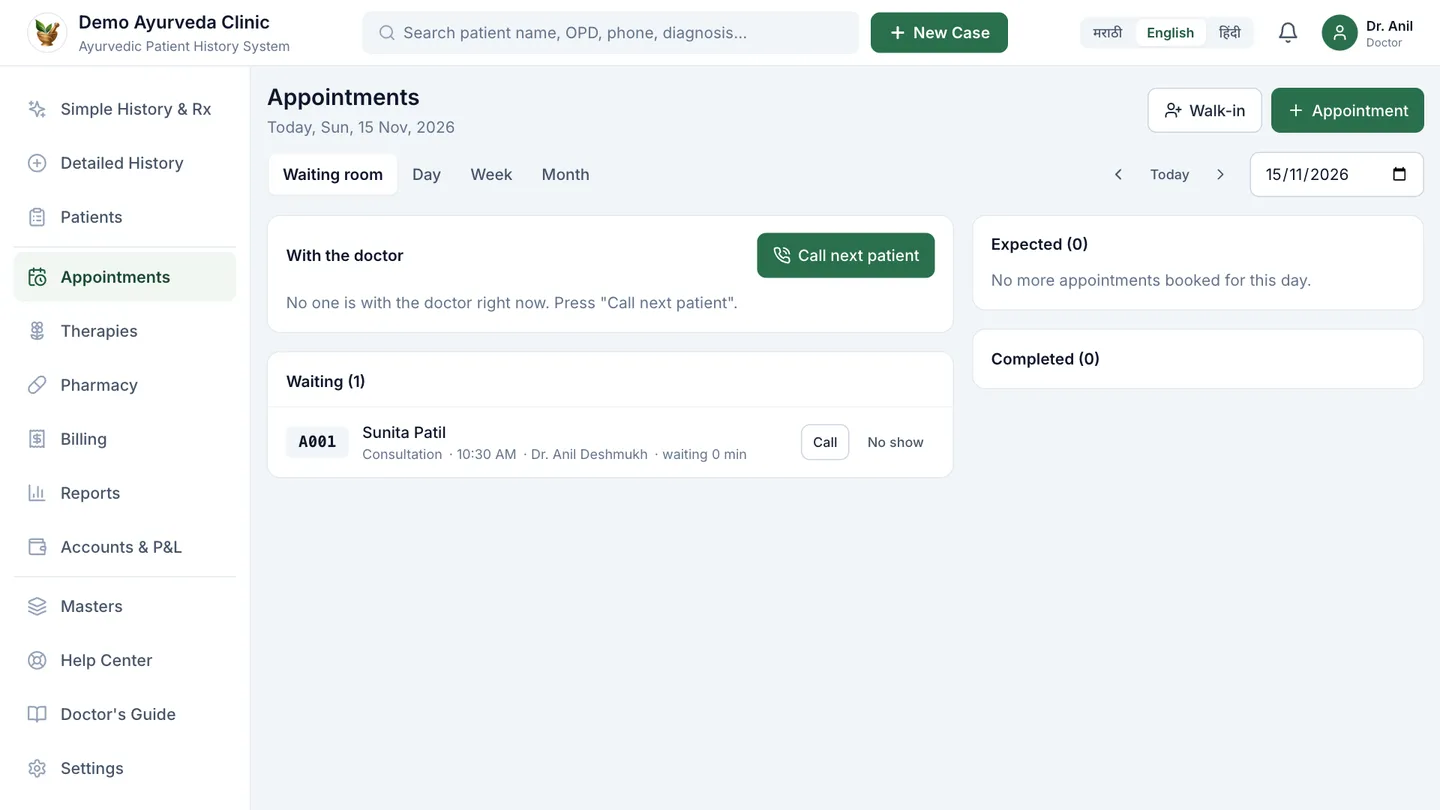
A waiting room screen shows who is with the doctor, who is waiting and for how long. The doctor calls the next patient from it instead of shouting names at the door.
2. Case history and examination
The doctor records the chief complaint and its duration, the history, and vitals such as pulse, BP, weight and temperature. For new and chronic patients, a full Ayurvedic examination follows:
- Ashtavidha Pariksha: Nadi, Mala, Mutra, Jihva, Shabda, Sparsha, Drik and Akriti
- Prakriti, Agni and Koshtha
- Dosha, Dushya and Samprapti, leading to the Ayurvedic diagnosis alongside any modern diagnosis
Follow-up patients usually need only the change since the last visit. See our Ayurvedic case paper format for the full structure.
3. Prescription and advice
The prescription lists each medicine with dose, timing, Anupana and duration. It also gives Pathya–Apathya (diet and lifestyle advice), and any therapy advised.
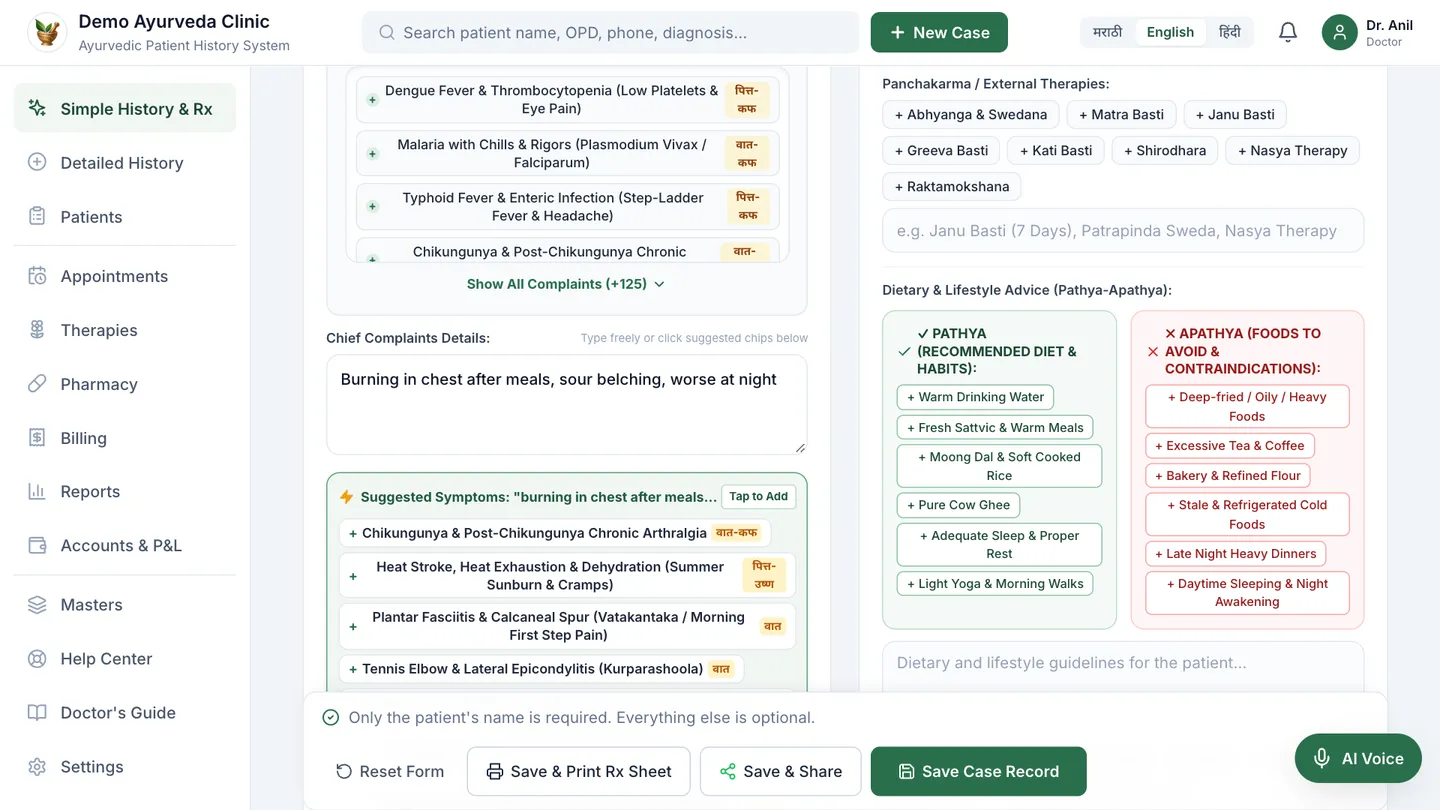
Our guide to the Ayurvedic prescription format shows how to write each line so that patients follow it.
4. Pharmacy, therapy and billing
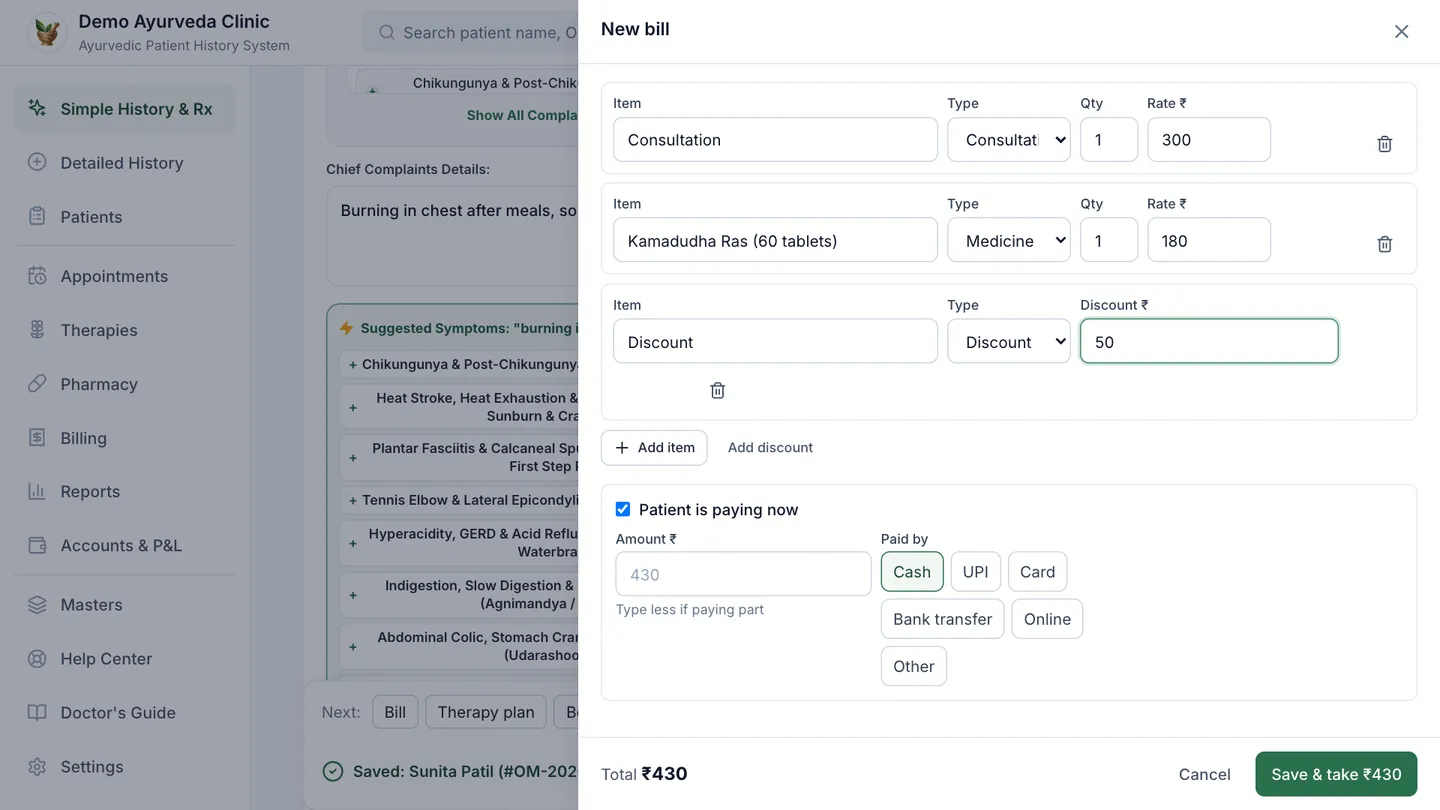
The patient collects medicines from the hospital pharmacy, books any Panchakarma sessions, and pays at the billing counter. A single bill for the visit can carry the consultation fee, medicines, therapy and any discount.
5. Follow-up
Most Ayurvedic treatment needs review in one to four weeks. The follow-up date is given before the patient leaves, so the patient knows when to come back and the hospital can call if they don't.
What a patient should bring to an Ayurveda OPD
- Old prescriptions and case papers, from Ayurvedic and other doctors
- Recent blood reports, scans and discharge summaries
- A list of medicines currently being taken, including modern medicines
- For a first visit: notes on appetite, bowel habits, sleep and diet, since the doctor will ask about them
Keeping OPD records without a paper register
A busy Ayurveda OPD sees dozens of patients a day. Paper registers make three things hard:
- Finding old visits. Follow-up depends on comparing today with the first visit.
- Daily OPD figures. Hospitals and colleges need daily OPD numbers by department and doctor. Counting them from a register takes hours.
- Linking OPD, pharmacy and billing. Medicines and therapies advised in the OPD go unbilled or are dispensed without a record.
BAMS OPD software solves these with one patient record, holding every visit, prescription, therapy plan and bill. Each visit is saved with its date, doctor and OPD number, so daily OPD numbers are available without counting. For hospitals with in-patient wards and several departments, see Ayurveda hospital management software. For AYUSH hospitals and college hospitals, see software for AYUSH hospitals and Ayurveda colleges.
Frequently asked questions
What OPD services does an Ayurveda hospital provide?
Consultation and treatment in Kayachikitsa, Panchakarma, Shalya, Shalakya, Prasuti and Stri Roga, Kaumarbhritya and Swasthavritta, with medicines from the hospital pharmacy, Panchakarma and local therapies, and diet and lifestyle advice.
Is an appointment needed for an Ayurvedic OPD?
Most Ayurveda OPDs accept walk-in patients in OPD hours. Many also take appointments, which shortens the wait. Check with the hospital.
How long does a first Ayurvedic OPD visit take?
Longer than a follow-up, because the doctor takes a full history and does an Ayurvedic examination. Expect 20–40 minutes with the doctor, plus registration and pharmacy time.
What is a daily OPD register?
The daily record of every out-patient seen: date, OPD number, patient details, complaint, diagnosis and treatment. Software keeps it automatically, as each saved visit is an entry.