
OPD Token System for Ayurvedic Clinics: Run the Queue
23 November 2026 · AyurHealthPlus
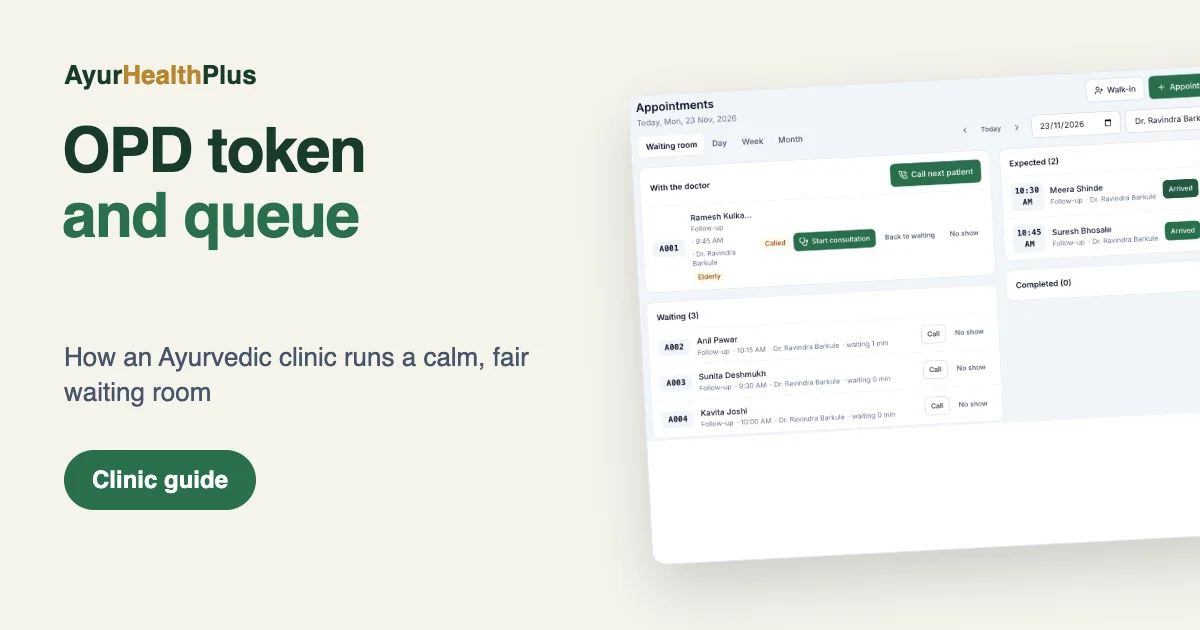
How an Ayurvedic clinic can run a fair OPD queue: tokens by arrival, priority for elderly and emergency patients, walk-ins, and less waiting.
Short answer: An OPD token system gives each patient a number when they arrive (A001, A002…) and calls them in that order. Emergency patients go first, and elderly patients or those who need help are moved up. Booked patients and walk-ins join the same list once they arrive, so nobody is called just because they were booked earlier but came late. Reception and the doctor work from one shared list, and the clinic can see how long each patient has waited.
This guide is for Ayurvedic doctors and clinic staff who want a calmer waiting room and fewer "when is my turn?" questions at the desk.
Key points
- Give the token when the patient arrives, not when they book.
- One rule for everyone: emergency first, then elderly or needing help, then token order.
- Walk-ins and booked patients share one queue per doctor.
- Track waiting time. It tells you when to add a doctor or change slot length.
- Mark no-shows, so the list stays honest and you can follow them up.
Why Ayurvedic OPDs need a token system
An Ayurvedic consultation takes longer than a quick general OPD visit. The history, Nadi, Jihva and the questions about Mala, Mutra and sleep all take time. Some patients also go on to Panchakarma or the pharmacy. Without a clear order, the waiting room fills with patients asking who is next, reception guesses, and the doctor is interrupted. A token system replaces guessing with a rule that everyone can see.
How a patient moves through the queue
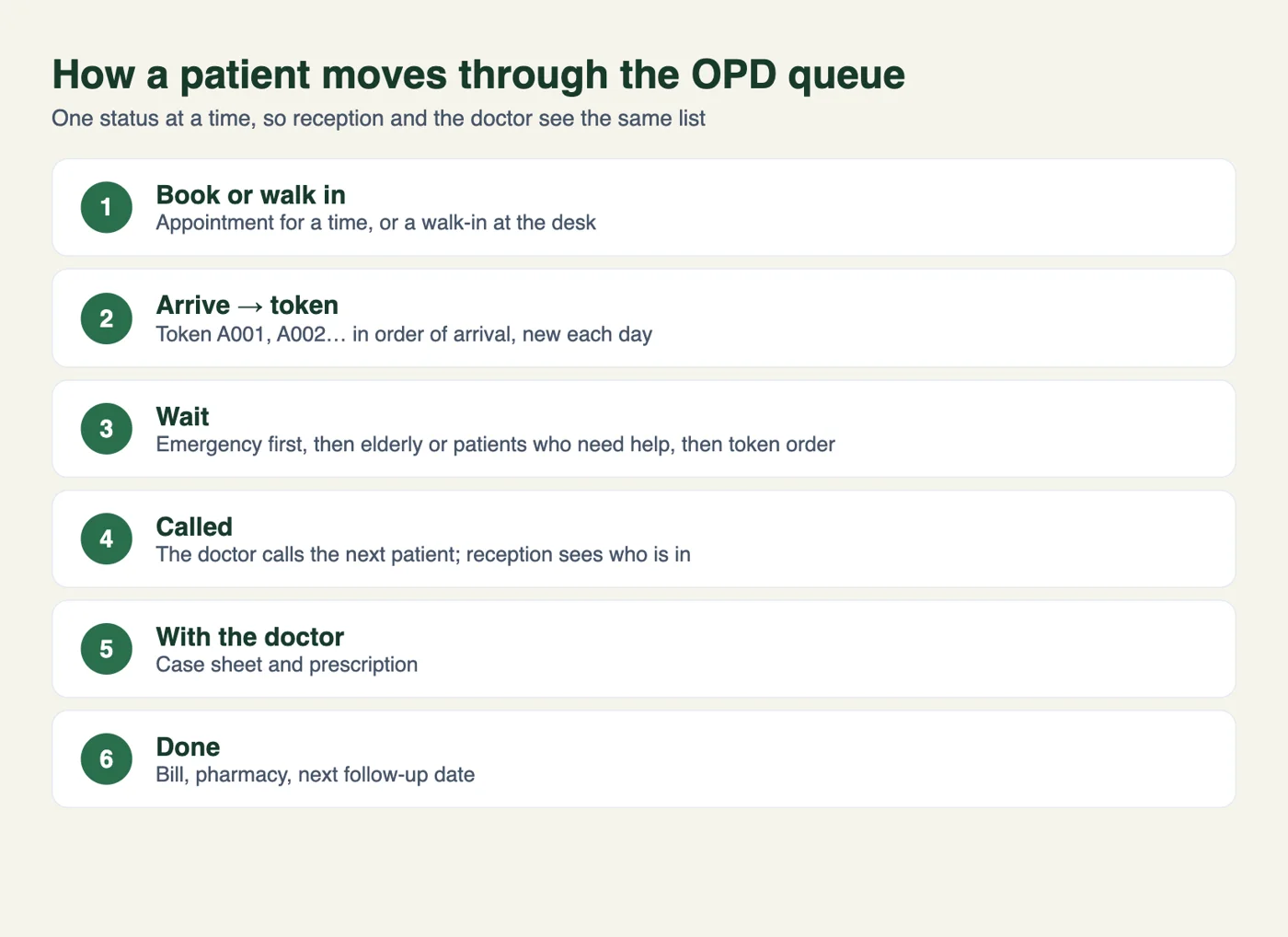
- Book or walk in. A booked patient has a time; a walk-in is added at the desk.
- Arrive and get a token. The token is given in order of arrival and starts again at A001 each day.
- Wait. Emergency patients go first, then elderly patients or those who need help, then everyone else by token.
- Called. The doctor calls the next patient, and reception sees who is in.
- With the doctor. The case sheet and prescription are written.
- Done. The bill, the pharmacy and the next follow-up date.
Rules that keep the queue fair
- Token on arrival, not on booking. A patient booked for 10 am who arrives at 11 joins the queue at 11.
- Priority is for a reason, and recorded. Emergency, elderly or needing help. Not "known to the doctor".
- One queue per doctor. In a multi-doctor clinic, each doctor calls only their own patients.
- No-show after a fair wait. Mark them and call later, rather than leaving them on the list all day.
- Same rule at every desk. Staff shouldn't make exceptions that patients can see.
Walk-ins and appointments together
Most Ayurvedic clinics in India have both. Keep appointment slots for follow-ups and Panchakarma reviews, and leave gaps for walk-ins. A slot of 10 to 15 minutes suits a follow-up; a new patient with a detailed case history needs more. If walk-ins regularly wait over 45 minutes, add a session or shorten follow-up slots.
Running the queue in AyurHealthPlus
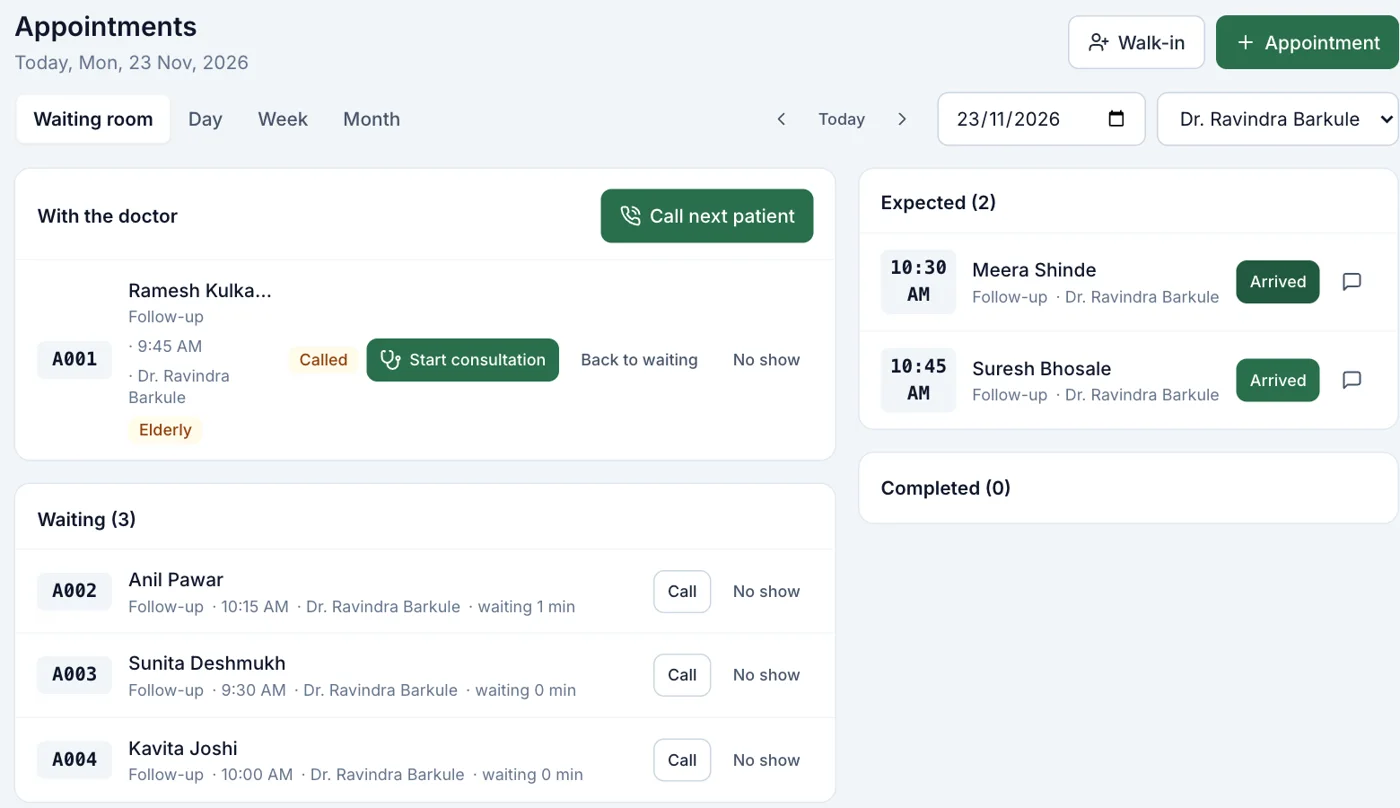
AyurHealthPlus has a waiting room screen for reception and doctors:
- Tokens on arrival: A001, A002 and so on, in order of arrival, starting again each day. The clinic can set its own letter.
- Walk-ins go straight into the waiting list; booked patients move there when marked Arrived.
- Priority: emergency first, then elderly or needs help, then token order.
- Call next patient: the doctor's button calls the right patient by these rules.
- One list per doctor, with sections for With the doctor, Waiting (with minutes waited), Expected and Completed.
- No show, Back to waiting and Reschedule, for when plans change.
It doesn't have a TV screen for calling tokens in the waiting room, and it doesn't send SMS when a token is called. See BAMS OPD software for the full OPD, our guide to OPD services in an Ayurveda hospital, or the patient follow-up system for bringing patients back on time.
Frequently asked questions
What is an OPD token system?
A way of numbering patients as they arrive (A001, A002…) and calling them in that order, with set rules for emergencies and elderly patients. It keeps the waiting room fair and quiet.
Should the token be given at booking or on arrival?
On arrival. Tokens by booking let late patients jump ahead of those who are already waiting.
How do you handle elderly and emergency patients in the queue?
Emergency patients go first. Elderly patients and those who need help are moved ahead of the general queue. Record the reason, so the rule is applied the same way every time.
Can walk-ins and appointments share one queue?
Yes. Both join the doctor's waiting list when they arrive and get the next token. Leave gaps between appointment slots for walk-ins.
Does AyurHealthPlus have an OPD token system?
Yes. It gives tokens on arrival, puts emergency and elderly patients first, has a Call next patient button, and keeps one queue per doctor. It doesn't have a TV display or SMS calling.